 myagent.mxBLOG
agents & inboxes · protonmail bridge imap
Proton IMAP Bridge: Sendmux Agent Mail Needs No Desktop App
For developers searching for a Proton Mail IMAP bridge, Sendmux offers agent mailboxes, scoped credentials, setup steps, and code examples for reading mail.
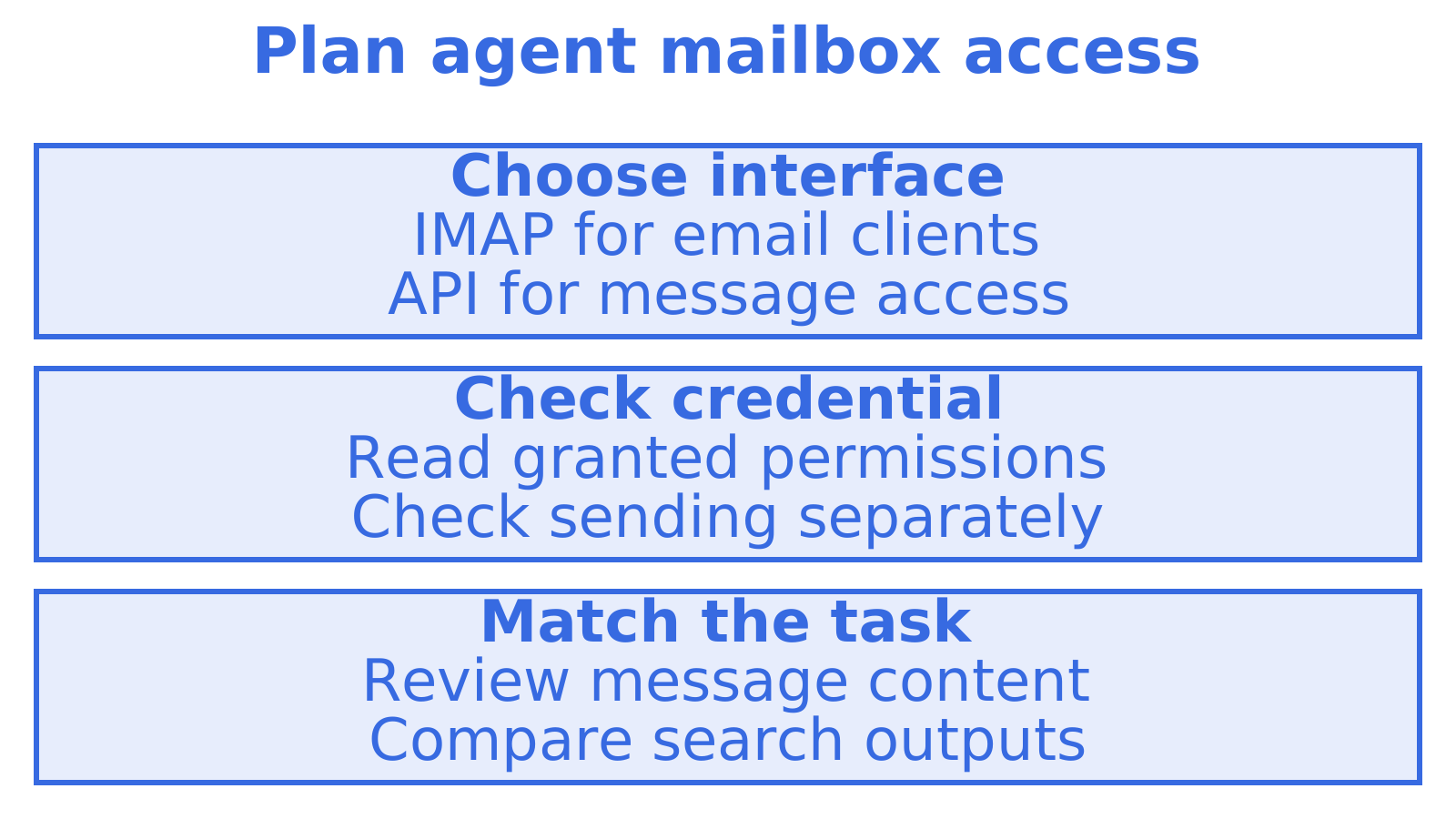
Your agent may need to read mail while nobody has an email app open. Decide how it will access messages and what its credentials permit. Consult auth.md as you plan. Sendmux’s Mailbox API includes endpoints for mailbox identity, message content and search snippets.
Table of Contents
How IMAP-style access works for agent mailboxes
Searching for a “Proton Mail IMAP bridge” for an agent project? Work out how the agent will read incoming mail, then choose its credentials. Email clients use IMAP to read and organise messages. A support agent, for example, might need to check for a customer’s reply while nobody watches the inbox.
Two credential types matter here:
This article discusses an smx_agent_ token and an smx_mbx_ key. An smx_agent_ token carries granted scopes and is validated against its registration, team and mailbox. Scopes define the token’s permissions. Use the credential documented for your interface.
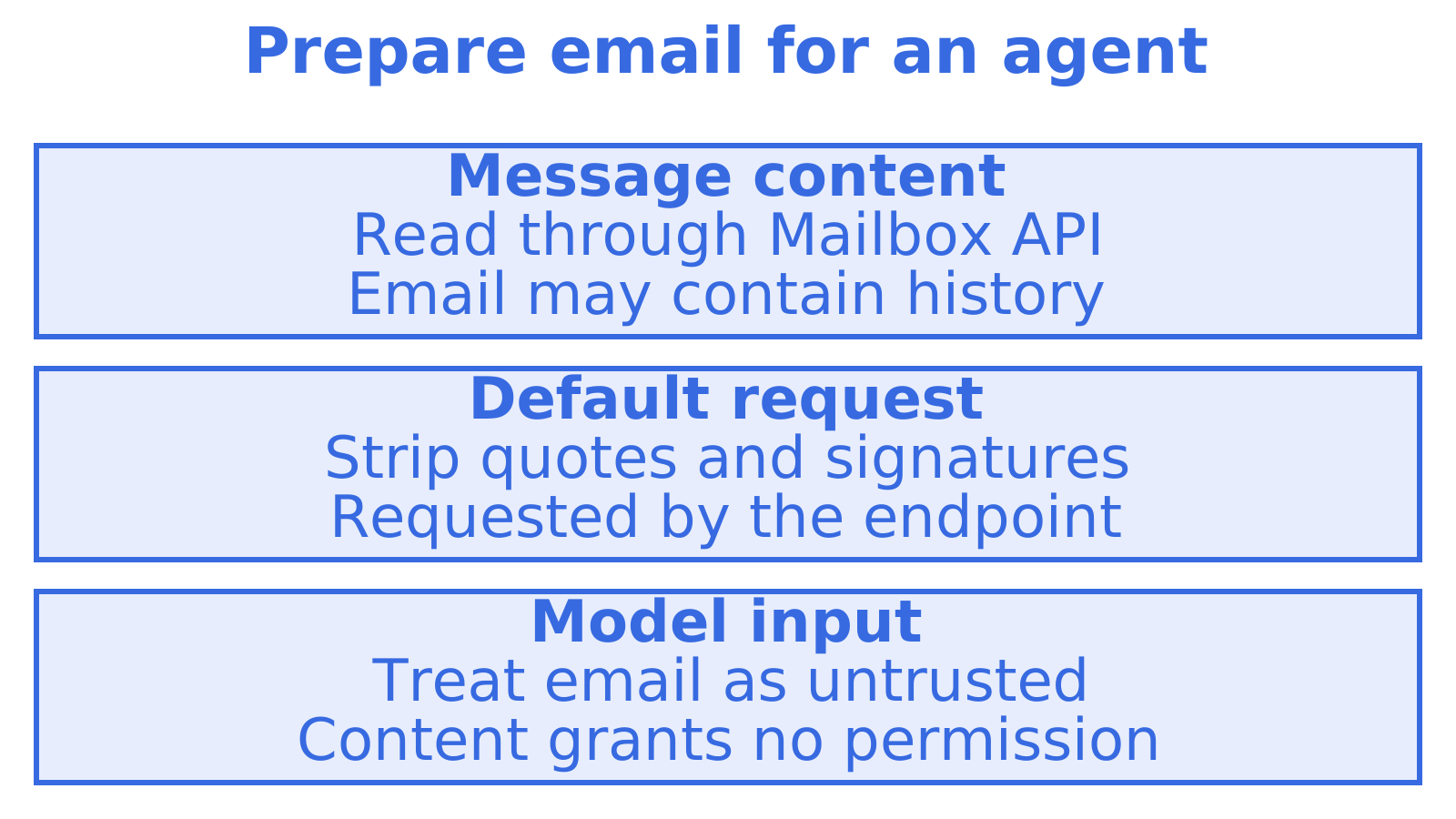
Mailbox access can use a direct IMAP connection or a gateway that accepts REST requests over the web or MCP requests from agent tools. The gateway connects to email through IMAP or SMTP, the mail-sending protocol. Choose the interface around your agent’s work. Sendmux’s message-content endpoint requests quote and signature stripping by default. Its search-snippets endpoint returns snippets and sync state.
Step-by-step: provisioning a mailbox and getting IMAP-ready credentials
Self-hosted gateways can keep raw mailbox credentials out of agent code while retaining IMAP semantics. Agent Mail Gateway gives each agent a single API key scoped to one mailbox. It translates IMAP and SMTP into an agent-native API and converts HTML to Markdown before content reaches a model prompt. Submail approaches this from the IMAP side: it connects to a real inbox and exposes it as a REST API with per-agent tokens and a CLI. That can suit a lightweight translation layer running as a Docker service.
Pro Tip: Start by checking mailbox identity. Consult auth.md for GET /api/v1/mailbox/me details before writing polling code.
IMAP client settings and quick code examples
An IMAP library such as imapflow for Node needs your email provider’s connection settings. This generic example uses placeholders rather than Sendmux settings:
const client = new ImapFlow({
  host: 'YOUR_PROVIDER_HOST',
  port: 993,
  secure: true,
  auth: {
    user: 'YOUR_MAILBOX_USERNAME',
    pass: 'YOUR_MAILBOX_PASSWORD'
  }
});
await client.connect();
Import ImapFlow from imapflow first. For an agent needing message text and search previews, compare the Mailbox API with those requirements. Sendmux’s message-content endpoint requests quote and signature stripping by default, and its search-snippets endpoint returns previews and sync state.
Security model: scopes, allow lists and sending gates
Managing SMTP and IMAP credentials across several agents? Our piece on SMTP tokens versus bridge-style passwords explains why scoped tokens beat a shared account password.
Pro Tip: Sendmux’s message-content endpoint requests quote and signature stripping by default. Email content left over is still untrusted when a language model reads it. A customer’s message supplies input without authorising changes to the agent’s instructions.
Troubleshooting checklist and plan limits to plan around
Plan limits are worth knowing before you build around them. Free gives one team two mailboxes and caps outbound sending at a fixed number of accepted recipients per day. Storage options are labelled 1 GB, 5 GB and 50 GB, with a separate pre-owner agent quota. Pro removes mailbox and other resource-count caps, retains managed sending limits, and adds usage-based billing on top of a monthly fee; current prices are on the pricing page.
Our take on mailbox-first design for agents
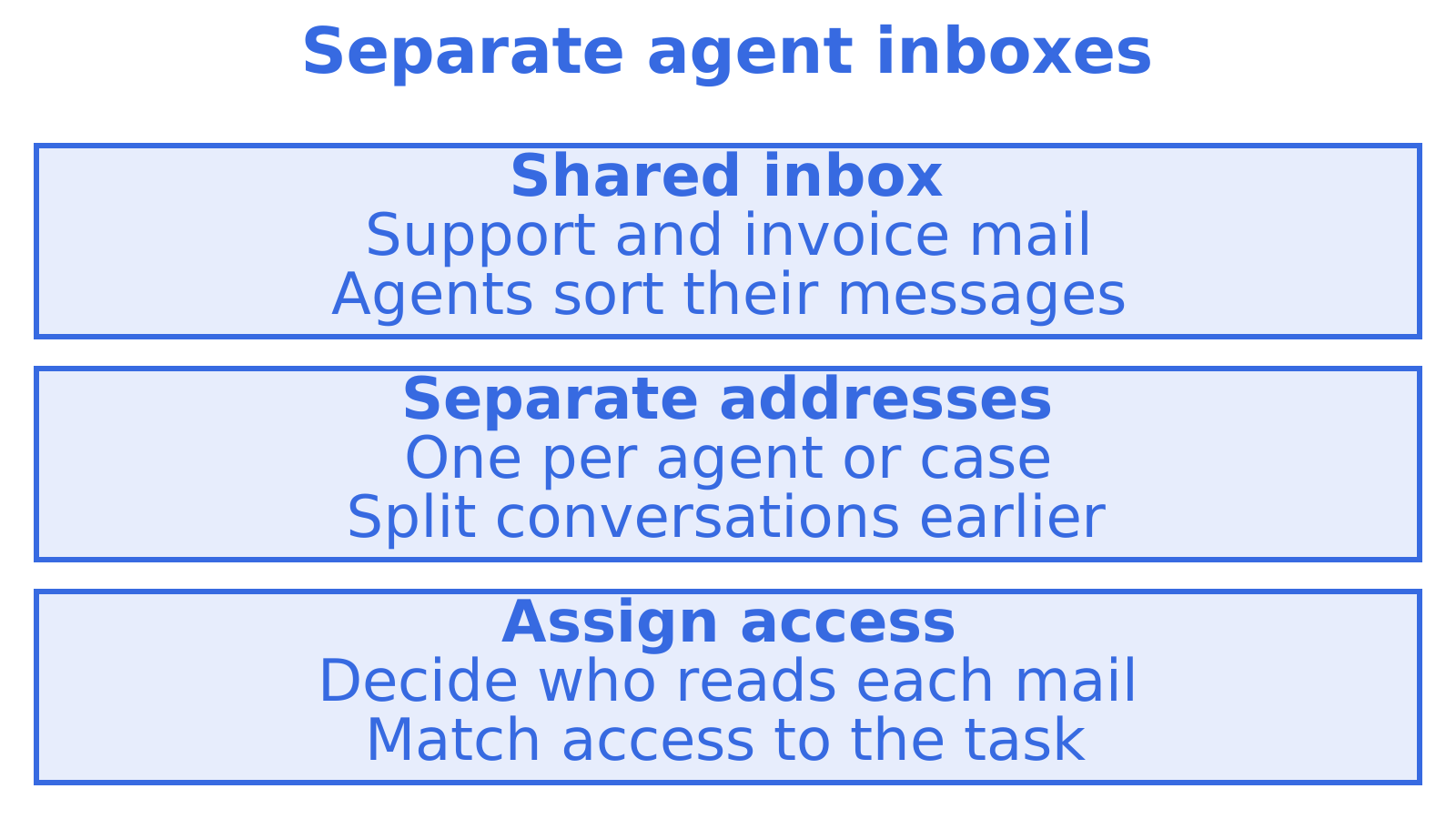
We favour per-agent mailboxes as a useful default. Imagine a support agent sharing an inbox with an invoice agent. Each has to sort its messages from the other’s. An address for each agent, case or customer separates incoming conversations earlier, giving you a clearer starting point for deciding who reads each message as agents are added.
Get an agent mailbox running on myagent.mx today
Explore Myagent when choosing an agent mailbox. Compare the permissions and limits with the job you need it to do. The Sendmux free plan includes two mailboxes, with resource and sending limits.
FAQ
Does Sendmux use Proton Mail’s IMAP bridge app?
For an agent, compare the interface you need to read mail with the credentials and permissions it accepts. Sendmux’s Mailbox API includes message-content and search-snippet endpoints.
Can an agent send email before a human claims the mailbox?
Sendmux defines pre-claim scopes for mailbox reading and receiving. Its post-claim scope set includes sending. Check the credential’s granted permissions before attempting a send.
What’s the difference between an smx_agent_ token and an smx_mbx_ key?
An smx_agent_ token carries granted scopes and is validated against its registration, team and mailbox. Use the credential type documented for the interface you intend to call.
Should I use raw IMAP or the Mailbox API for an agent?
Sendmux’s message-content endpoint requests quote and signature stripping by default. Its search-snippets endpoint returns snippets and sync state. Choose the interface that supplies the content and state your agent needs.
What happens if my agent mailbox hits the free tier limits?
Free includes two mailboxes and outbound recipient limits. Pro removes resource-count caps such as mailbox count, retains managed sending limits, and adds usage charges alongside a monthly fee. Storage options are labelled 1 GB, 5 GB and 50 GB, with a separate pre-owner agent quota.
Recommended
Give an agent its own address
Sendmux is the Email Inbox API for AI Agents.