 myagent.mxBLOG
alternatives · Front alternatives
The Best Front Alternatives for AI Agent Mailboxes
Discover top Front alternatives for AI agent mailboxes. Explore Sendmux, OpenAgent, and others to find the best solution for your team.
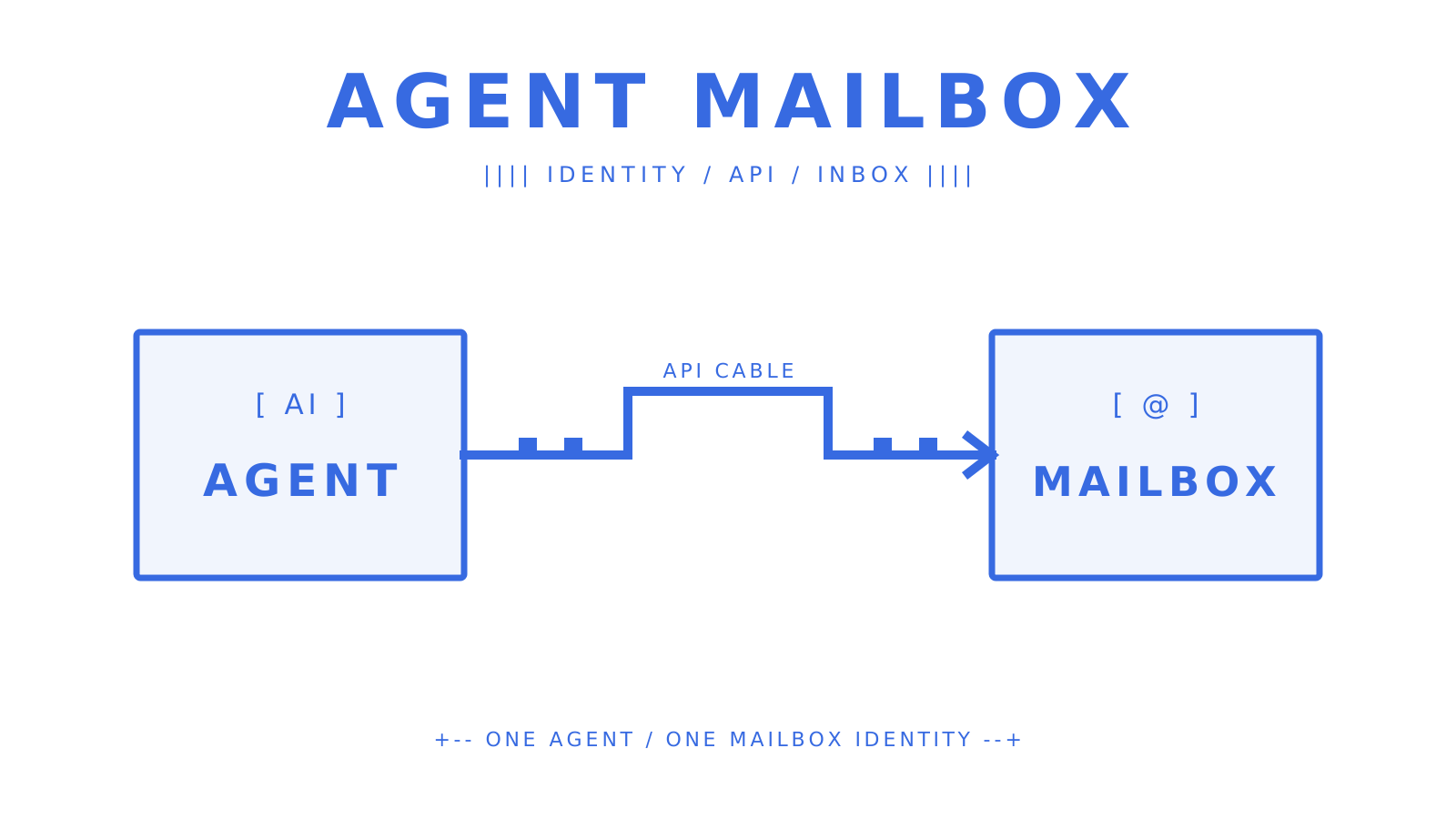
The right Front alternative depends on whose identity the agent should use. Front now offers an official MCP server for agents acting with a human teammate’s Front permissions over existing conversations. Dedicated agent-mailbox platforms fit a different job: giving each agent or tenant its own mailbox identity and application-scoped credentials.
For teams building that second model, the useful shortlist is Sendmux, OpenAgent, AgentMail, and MailSlurp. Each takes a different position on hosting, mailbox ownership, routing, and operational responsibility.
Shortlist at a glance:
- Sendmux: Hosted mailbox and sending infrastructure with REST, MCP, scoped credentials, provider routing, and delivery events.
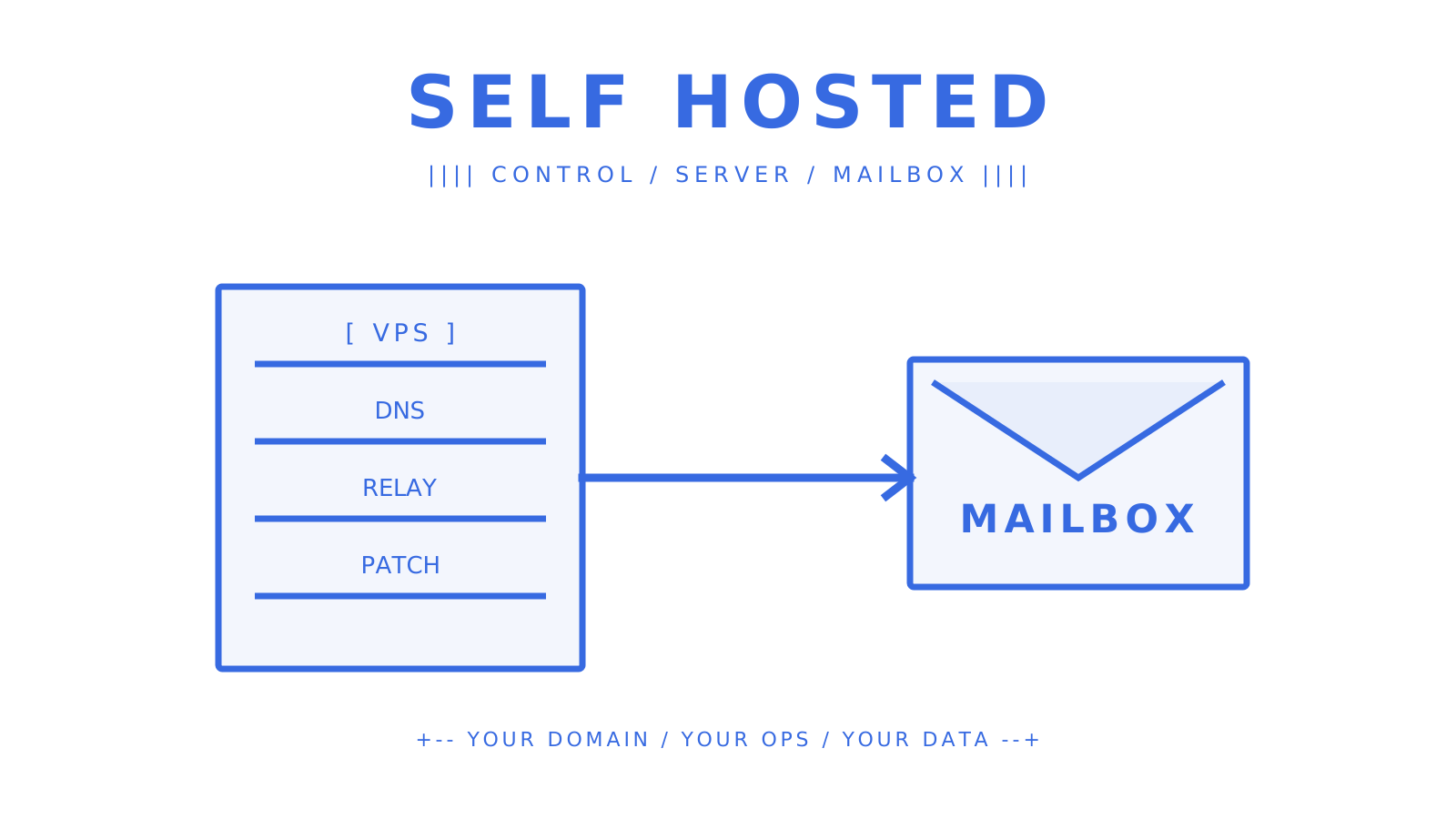
- OpenAgent: Apache-2.0 self-hosted email stack with REST and MCP, catch-all addressing, and unlimited mailboxes on your own domain.
- AgentMail: Hosted API for creating, sending, receiving, and managing agent inboxes, with MCP plus webhook and WebSocket integrations.
- MailSlurp: Programmable email and SMS APIs for inbox testing, routing, OTP workflows, webhooks, and deliverability checks.
Key Takeaways
Choose the identity and operating model first. A shared-inbox MCP connector, a hosted agent mailbox, and a self-hosted mail stack solve related but different problems.
| Point | Details |
|---|---|
| Front now has official MCP | Its open-beta MCP server uses each connected user’s identity and permissions. |
| Dedicated identities need mailbox infrastructure | Per-agent or per-tenant mailboxes require provisioning, application credentials, and inbound state. |
| Self-hosting trades service work for control | OpenAgent gives you the stack; your team operates the server and delivery dependencies. |
| Routing claims need contract evidence | Compare documented providers, weights, quotas, event schemas, and failover behavior. |
| Throughput wording must stay qualified | Sendmux records a 10M+ accepted messages per day capacity target, not a blanket production guarantee. |
What are the best Front alternatives for agent mailboxes?
The best choice changes with the job. If an agent should act inside an existing Front workspace as the connected human user, Front’s official MCP server is a direct route. If an agent needs a durable address, independent credentials, programmable inbound mail, and tenant isolation, compare purpose-built mailbox platforms.
| Dimension | Front MCP | Sendmux | OpenAgent | AgentMail | MailSlurp |
|---|---|---|---|---|---|
| Primary model | Agent acts through a Front user | Hosted mailbox and routing layer | Self-hosted mailbox stack | Hosted agent inbox API | Hosted programmable inbox/testing API |
| Identity boundary | Connected user’s Front permissions | Mailbox and team-scoped application credentials | Your self-hosted deployment | Pod and API-key scopes | Account/inbox API resources |
| Agent interface | Official MCP in open beta | REST, SDKs, CLI, MCP | REST and MCP | REST and hosted MCP | REST and SDKs |
| Receiving model | Existing Front conversations | Mailboxes, threads, webhooks, inbound SSE | Catch-all and mailbox APIs | Inboxes, webhooks, WebSockets | Programmable inboxes and webhooks |
| Hosting | Front-hosted | Hosted | Self-hosted | Hosted | Hosted |
| Published standard-message price | Confirm with Front | Pro is $7 per team each month plus $0.000500 per connected-provider accepted recipient | Self-hosting costs | Confirm with AgentMail | Confirm with MailSlurp |
| Routing evidence | Front conversation operations | Weighted provider groups, quotas, blacklist-aware alternatives | Bring your own SMTP relay | Managed sending | Confirm required routing behavior |
Front’s MCP server documentation says the service is in open beta, authenticates each user with OAuth, and limits actions to that user’s Front permissions. The same page currently lists Codex as incompatible because its connection model requires capabilities Front’s MCP registration flow does not support. That compatibility note may change, so verify it when integration work begins.
AI-native email infrastructure is a useful category overview, but vendor selection should rest on each product’s current primary documentation. Front alternatives is also an ambiguous query: UI framework alternatives, frontend options, best front-end libraries, and other front-end solutions refer to software-interface tooling, not the Front shared-inbox product discussed here. This guide covers alternatives to Front for agent email identity and mailbox automation.
For a traditional shared-inbox comparison such as Front vs Missive, prioritize human collaboration features. For a Front replacement that provisions agent identities, prioritize API scopes, mailbox state, event delivery, and tenant boundaries. Those are different evaluation tracks even when search results group them under Front app competitors.
What engineers should actually watch for during vendor selection
Start with the public interface and trace one complete mail flow. Provision an identity, receive a real message, inspect the normalized body and links, reply in-thread, then observe delivery or failure events.
Check these boundaries:
- Identity: Is the agent acting as a human user, one mailbox, one tenant, or an entire account?
- Credential scope: Can a key be limited to the required mailbox operations?
- Inbound delivery: Are webhooks or streams documented, signed where applicable, and retryable?
- Outbound routing: Are providers, weights, quotas, health checks, and failover behavior explicit?
- Message representation: Does the API expose structured text, HTML, headers, attachments, threads, and extracted links without UI scraping?
- Operational ownership: Who maintains DNS, relays, reputation, server security, and incident response?
Universal warm-up volumes and proof-of-concept durations are not reliable selection criteria. Plan the evaluation around documented domain-authentication, mailbox, event, and routing contracts, then measure the real setup time and sending behavior in your own environment.
Front’s per-user MCP identity works well when the agent should inherit an employee’s existing access. Sendmux’s mailbox-scoped model fits application agents that need their own identities. OpenAgent fits teams that deliberately accept infrastructure ownership. AgentMail and MailSlurp provide hosted APIs with different emphases on agent inboxes and testing workflows.
Do not assume feature parity from similar labels. OpenAgent documents built-in OTP and link extraction. Sendmux documents cleaned bodies and extracted links, but the current public contract reviewed for this article does not establish a built-in OTP-extraction field. MailSlurp documents OTP verification tooling. AgentMail documents inbox and integration primitives. Test the exact representation your agent consumes.
Sendmux gives your agents a real mailbox, not a workaround
Sendmux provisions real mailboxes on @myagent.mx or a verified custom domain and exposes them through REST, SDKs, CLI, and MCP. Mailbox-scoped credentials can grant exact permissions such as email.send, email.receive, mailbox.read, and mailbox.settings.update.
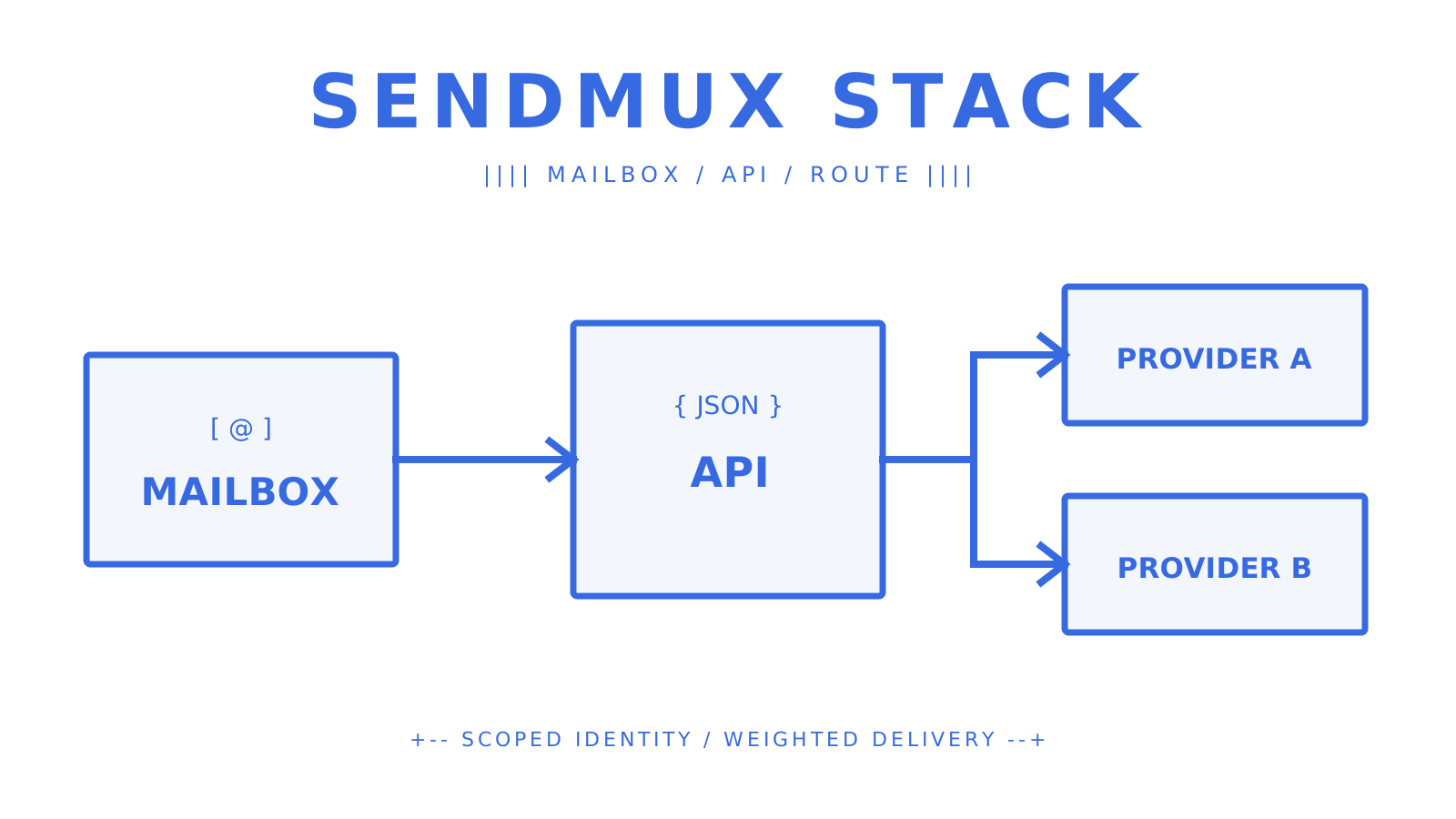
Outbound delivery can use weighted groups across configured provider types, including Gmail OAuth, Outlook OAuth, SMTP, and managed delivery options. The sending path filters blacklisted or quota-exhausted providers and tries alternatives in weighted order. Delivery changes arrive as signed dotted events such as message.delivered, message.bounced, message.complained, message.rejected, and message.delivery_delayed.
For inbound work, the API exposes mailbox messages and threads while SSE can notify an agent about new mail. Those inbound streams are separate from outbound delivery webhooks. Use bounce and complaint events as inputs to your application’s recipient policy.
Connected-provider sending costs $0.000500 per provider-accepted recipient, plus the $7 monthly Pro team charge. Sendmux’s sending repository records a 10M+ accepted messages per day capacity target, with complete business-pipeline validation still identified as separate work. That phrasing matters. It describes the intended capacity of the sending path without turning it into an unsupported guarantee for every deployment.
Sources
- AI-Native Email Infrastructure: Complete Developer Guide
- Front MCP server
- OpenAgent repository
- AgentMail introduction
- AgentMail MCP integration
- AgentMail multi-tenancy
- MailSlurp machine-readable documentation
- Sendmux agent inboxes
- Sendmux AI-agent builders
FAQ
What makes an email API “AI-native”?
An AI-native email API gives agents structured mailbox operations through REST or MCP, so they can send, receive, inspect threads, and act on messages without scraping a human inbox interface.
Can I use Sendmux for multi-tenant SaaS with separate sending domains per customer?
Yes. Sendmux supports team-scoped resources, custom-domain verification, mailbox-scoped credentials, and provider quotas. Use bounce and complaint events as inputs to your application’s recipient policy.
When does OpenAgent make more sense than a hosted option?
OpenAgent makes sense when you want an Apache-2.0 self-hosted mailbox stack on your own domain and accept responsibility for the server, DNS, relay configuration, security updates, and deliverability operations.
How long does a Sendmux POC realistically take?
There is no universal duration. Time depends on domain DNS propagation, provider setup, mailbox and key provisioning, webhook handling, and the failure cases your team chooses to validate before production.
Does MailSlurp support outbound routing with failover?
MailSlurp documents programmable inboxes, email and SMS APIs, webhooks, testing, OTP verification, and deliverability tools. The primary documentation reviewed for this article does not verify weighted multi-provider outbound routing, so confirm that requirement directly before selecting it.
Give an agent its own address
Sendmux is the Email Inbox API for AI Agents.