 myagent.mxBLOG
alternatives · Missive like apps
Best Missive Alternatives for Agent-First Email APIs
Discover top Missive alternatives for building AI agents with programmable inboxes, featuring Sendmux and more tailored solutions.
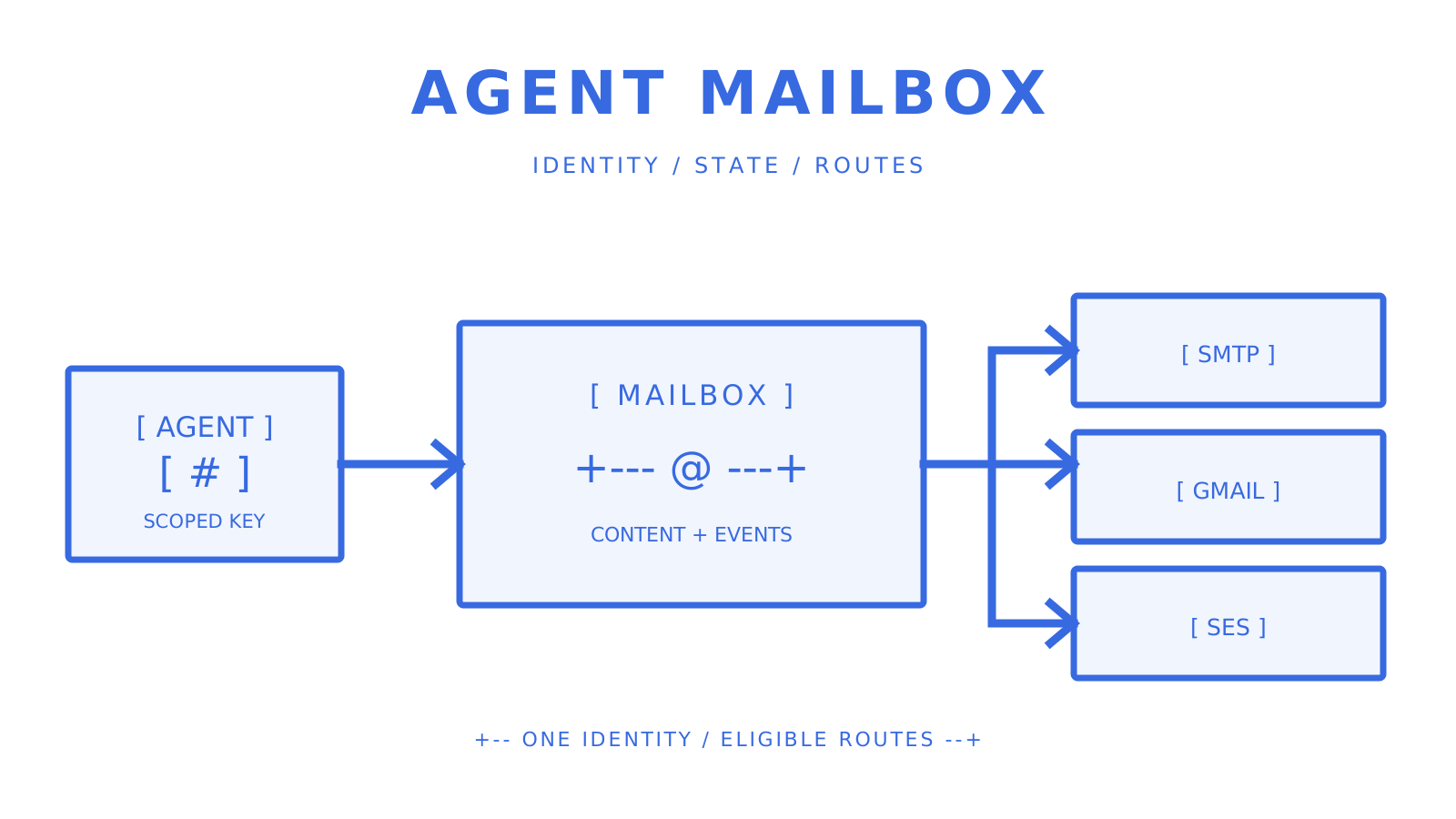
The best Missive alternative depends on the job. Human teams may need assignment and collaboration UI; agent-first applications need mailbox identity, scoped credentials, clean content, events, thread-aware sending, and tenant boundaries. Do not infer one operating model from the phrase shared inbox.
This guide covers Missive like apps, top email management apps, best Missive alternatives, Missive competitor tools, email collaboration software, what are Missive alternatives, Missive alternatives, and Missive vs Front for teams evaluating programmable agent mailboxes. Product names may appear in both UI and API searches, but the public contract determines what an integration can actually do.
Useful shortlist by operating model:
- Sendmux — hosted application-owned mailboxes, scoped credentials, clean message and thread content, inbound SSE, signed outbound webhooks, and configured provider routing
- OpenAgent — Apache-2.0 self-hosted email stack with REST and MCP, operated on your infrastructure
- AgentMail — hosted agent inbox API with MCP, webhooks, WebSockets, and documented multi-tenancy controls
- MailSlurp — hosted programmable inbox and testing API with webhooks, OTP tooling, and deliverability checks
- Resend, Postmark, Mailgun, and Amazon SES — delivery or inbound-processing surfaces whose exact mailbox-state fit must be verified separately
Pro Tip: Before comparing features, identify the agent’s identity: a human teammate, an application-owned mailbox, an existing provider mailbox, or a delivery-only sender.
Key Takeaways
Choose identity and ownership first. A human collaborative inbox, a hosted agent mailbox, a self-hosted mailbox stack, and a delivery API are related but not interchangeable.
| Point | Details |
|---|---|
| Agent identity | Application-owned mailboxes need lifecycle, scoped access, inbound state, and reply operations. |
| Self-hosting | OpenAgent provides source code; the operator owns deployment, relays, DNS, security, and availability. |
| Routing evidence | Sendmux exposes configured account types, weights, quota windows, blacklist filtering, and weighted alternatives. |
| Event boundary | Sendmux inbound mailbox events use SSE; outbound delivery changes use HMAC-SHA256 signed webhooks. |
| Verified Sendmux price | Pro costs $7 per team each month plus usage; connected recipients cost $0.000500 each and managed Amazon SES recipients cost $0.000750 each. |
Which Missive alternatives work for programmatic agent inboxes?
Compare only capabilities covered by the current primary contract.
| Option | Operating model | Agent-facing evidence | What to verify |
|---|---|---|---|
| Sendmux | Hosted mailbox and sending infrastructure | Mailboxes, clean content, scoped credentials, SSE, signed webhooks, configured accounts | Commercial terms and chosen provider routes |
| OpenAgent | Self-hosted mailbox stack | Apache-2.0 repository with REST and MCP | Deployment, relay, security, and deliverability ownership |
| AgentMail | Hosted agent inbox API | Inboxes, hosted MCP, webhooks, WebSockets, and scoped pods | Exact plan, retention, and tenant limits |
| MailSlurp | Hosted programmable inbox/testing API | Inbox, webhook, OTP, testing, and deliverability documentation | Required production routing behavior |
| Resend | Hosted delivery API | Send API with idempotency and inbound/webhook documentation | Whether retained mailbox state is required |
| Postmark | Hosted transactional and broadcast delivery | Separate Transactional and Broadcast Message Streams | Inbound state and workflow ownership |
| Mailgun | Hosted sending and inbound Routes | Route filters plus forward, store, and stop actions | Thread state and current plan limits |
| Amazon SES | AWS delivery service | Usage pricing, sending APIs, events, and dedicated-IP guidance | Application-owned inbound and thread state |
For Missive like apps or a Missive vs Front decision, evaluate the vendors’ current human-collaboration contracts. For an application-owned agent identity, require a documented mailbox resource, scoped access, message state, event semantics, and reply path.
How each alternative actually behaves for agent use cases
Programmatic inboxes and lifecycle
Sendmux provisions mailboxes through POST /api/v1/mailboxes and returns an initial bearer token plus matching mailbox password. Additional credentials use POST /api/v1/mailboxes/{public_id}/keys. The current mailbox permission taxonomy includes email.send, email.receive, mailbox.read, and mailbox.settings.update.
OpenAgent documents an Apache-2.0 self-hosted REST and MCP stack. AgentMail documents hosted agent inboxes, while MailSlurp documents programmable inbox and testing APIs. Confirm current deployment, tenant, retention, and production-delivery terms directly.
Delivery-first products may receive or parse inbound mail without owning the mailbox lifecycle your agent needs. Test provision, receive, retrieve, reply, suspend, and delete semantics as separate operations.
Two-way threading and message model
RFC 5322 defines Message-ID, In-Reply-To, and References identification fields. Sendmux clean-content endpoints return deterministic JSON, and mailbox sends accept the reply fields needed to preserve conversation context.
Store the RFC message identifiers, Sendmux message and thread identifiers, application conversation ID, and tenant ID together. Subject matching can remain a diagnostic fallback, not the primary correlation key.
Mailer To Go’s AI-native email architecture guide recommends typed JSON and illustrates tools named send_email, get_thread and search_inbox. These examples use structured results to avoid HTML extraction. Those are examples in that guide, not Sendmux operation names or an MCP-mandated tool set. Preserve the actual provider contract and RFC message identifiers when building your thread store.
Webhooks, SSE, and event reliability
Sendmux exposes inbound mailbox events at GET /api/v1/mailbox/events using SSE and supports Last-Event-ID for reconnection. Outbound delivery changes use HMAC-SHA256 signed webhooks. Verify the raw request body before parsing, then deduplicate by event ID.
Other products expose different combinations of webhooks, WebSockets, polling, or provider-native events. Compare signed payload shape, retry policy, replay, reconnect, and full-content retrieval from each official contract.
Pro Tip: Reject an event integration that cannot explain authentication, deduplication, retry, replay, and full-content retrieval separately.
Routing, failover, and multi-tenancy
Sendmux configured accounts include custom SMTP, Gmail API, Outlook API, and managed Amazon SES. Accounts expose routing weight plus per-second, per-minute, per-hour, and per-day quota windows. The sending implementation filters blacklisted or quota-exhausted accounts and selects from available accounts by weight.
That is verified availability-aware selection. It is not a promise that every provider error triggers universal automatic failover. Define which failures are retryable, which account remains eligible, and what evidence the application receives when no route is available.
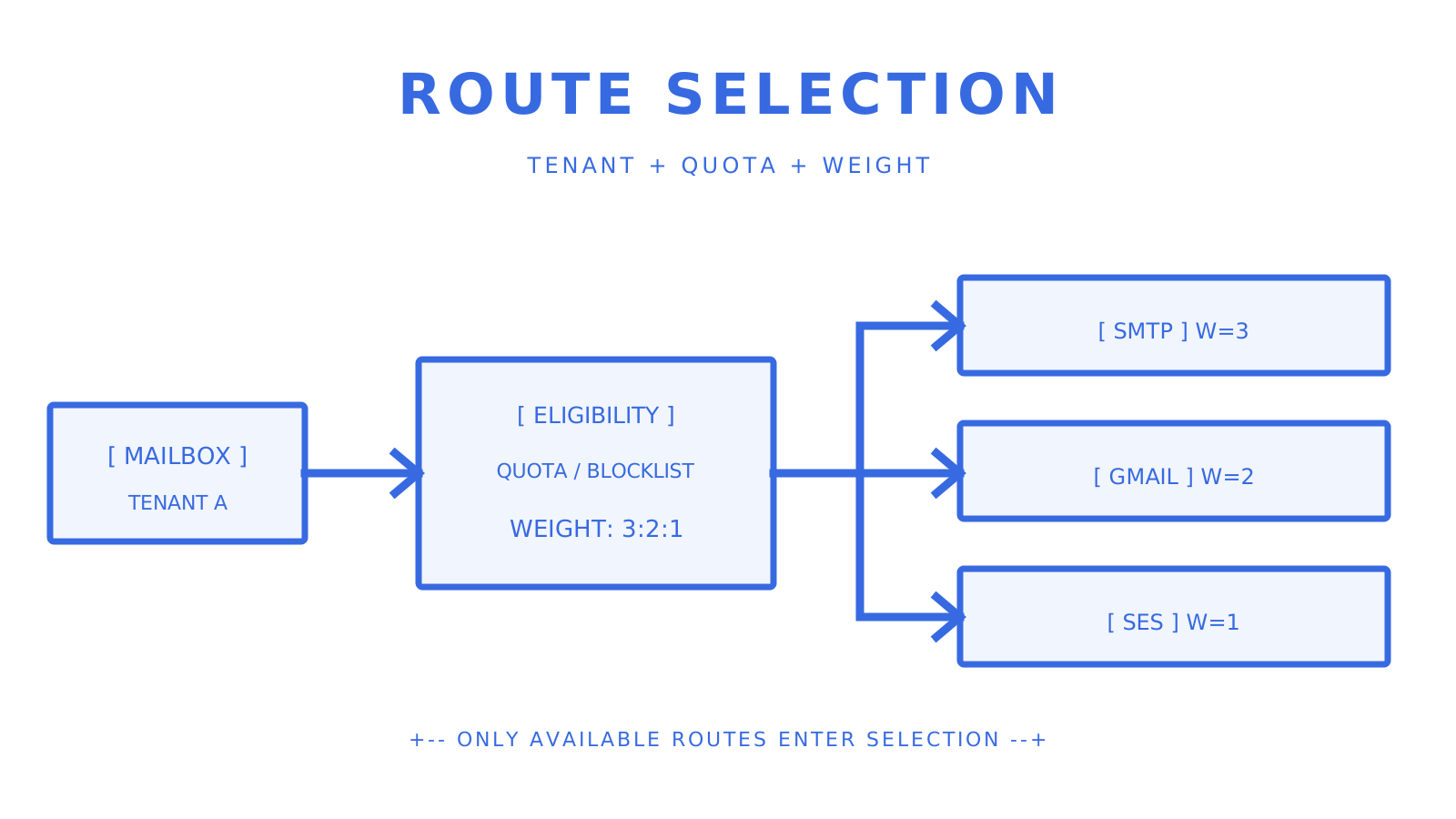
Tenant isolation also needs mailbox ownership, credential scope, provider eligibility, quotas, logs, and billing aligned to the same tenant. A separate mailbox alone does not prove reputation isolation.
Developer DX and AI integrations
Sendmux has SDKs for TypeScript, Python, Go, PHP, Ruby and Rust. CLI 1.5.0 includes 104 API commands, plus agent-onboarding and profile commands. Sendmux also documents REST, CLI, SDK, MCP, LangChain and Vercel AI SDK packages. Verify the specific operation you need because no one integration surface mirrors every API operation.
OpenAgent documents REST and MCP in its repository. AgentMail documents hosted MCP, and AtomicMail documents JMAP-oriented agent interfaces. Treat AI labels as integration surfaces, not as evidence of mailbox, routing, or delivery behavior.
AtomicMail’s agent interfaces combine JMAP and REST with MCP and AgentSkill options. Its documentation separates the shell-capable AgentSkill from the MCP server for chat-based clients, and also exposes raw JMAP access. The service currently describes itself as open alpha. Verify its operating limits and production terms before choosing it for a customer-facing mailbox.
How we evaluated these alternatives
Evaluation criteria, in priority order:
- Identity ownership — human user, application mailbox, tenant mailbox, or delivery-only sender
- Mailbox lifecycle — provision, receive, retrieve, reply, suspend, and remove
- Credential scope — exact mailbox and team permissions
- Message model — clean text, HTML, headers, attachments, and thread state
- Events — authentication, deduplication, retry, replay, and reconnect behavior
- Routing — account types, weights, quotas, blacklisting, and no-route behavior
- Tenant controls — ownership, provider access, logs, limits, and billing boundaries
- Developer tooling — current OpenAPI, SDK, CLI, MCP, and idempotency contracts
- Operational ownership — DNS, relays, reputation, security, backups, and incidents
The main evidence comes from the owning Sendmux repositories and the current vendor-owned documentation linked in the Sources section. Marketing rankings, cached feature grids, and unsupported benchmark numbers are excluded.
Coverage gap: no independent benchmark covers every option under the same workload. The reviewed Sendmux owner records a 10M messages per day capacity target; treat that as an owner target, not a blanket guarantee.
When to self-host vs. choose a hosted agent inbox API
Self-host when a requirement genuinely needs infrastructure ownership and the team can operate the mail stack. OpenAgent provides an inspectable starting point, but source availability does not remove DNS, relay, upgrade, security, backup, abuse, and deliverability work.
Choose a hosted mailbox API when the product needs application-owned inboxes but the team does not want to operate that infrastructure. Verify data-processing, residency, retention, deletion, support, and incident terms in the current contract instead of inferring them from hosting labels.
Choose a delivery API when the workload sends messages but does not need durable inbound mailbox state. Amazon SES, Resend, Postmark, and Mailgun expose different delivery and inbound-processing primitives; compare the exact API path your application owns.
Migration checkpoints:
- Use a non-production mailbox and consented recipients
- Verify domain records before sending
- Exercise clean-content, attachment, and reply flows
- Verify event signatures and replay behavior
- Test idempotent retries and quota exhaustion
- Record rollback criteria before increasing traffic
Sendmux covers the full agent email stack in one API
The reviewed Sendmux owners expose mailbox provisioning, one-time credentials, clean message and thread content, inbound SSE, signed outbound webhooks, thread-aware sends, configured provider accounts, quota windows, delivery logs, and CSV export.
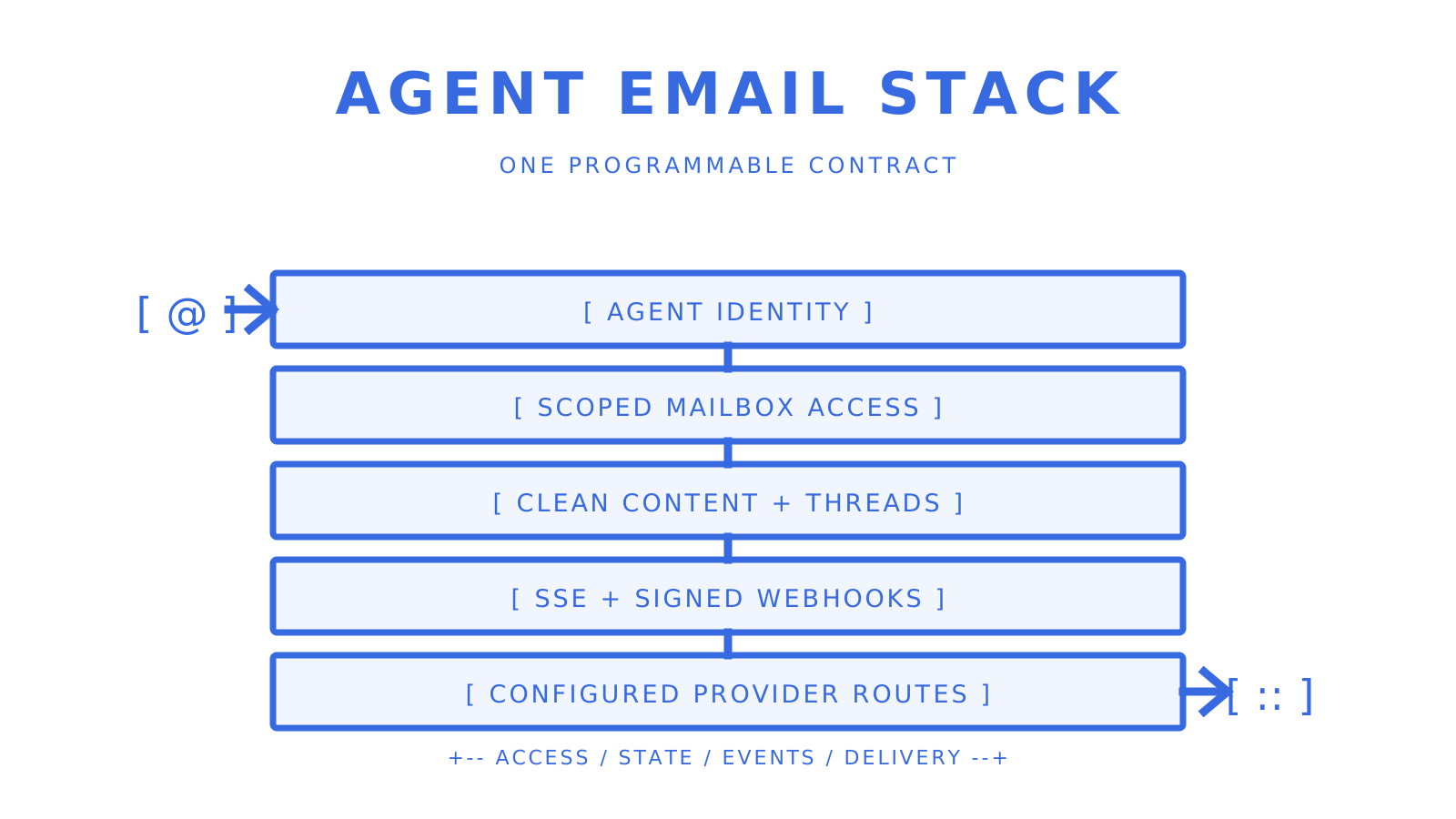
Mailbox-scoped permissions include email.send, email.receive, mailbox.read, and mailbox.settings.update. Configured accounts include custom SMTP, Gmail API, Outlook API, and managed Amazon SES. The implementation excludes blacklisted or quota-exhausted accounts before weighted selection.
Pro costs $7 per team each month plus usage. Each provider-accepted recipient through an owned or connected provider costs $0.000500; the Sendmux-managed Amazon SES route costs $0.000750 per accepted recipient. Storage costs $0.02 per decimal GB-month.
Sendmux’s multi-tenant platform includes team resource limits and Owner, Admin, Developer and Member roles. Mailbox-scoped credentials give application code a narrower access boundary. Keep the tenant’s provider configuration and delivery evidence aligned with that boundary. Separate mailbox identities alone do not guarantee reputation isolation, which depends on the sending domain, provider account and IP configuration.
The platform overview describes the product model. Use the owning repositories for technical behavior, then run a non-production mailbox journey before committing traffic.
Sources
FAQ
What makes Sendmux different from Resend or Postmark for agents?
Sendmux owns application mailboxes, clean message and thread state, mailbox-scoped credentials, inbound SSE, signed outbound webhooks, and configured sending accounts in one reviewed contract. Resend and Postmark expose delivery and inbound-processing features, but verify whether your application also needs retained mailbox lifecycle and thread operations.
Can OpenAgentMail replace a hosted inbox API in production?
OpenAgent can be a production foundation when the team deliberately accepts responsibility for deployment, relays, DNS, security updates, backups, abuse handling, observability, and deliverability. Review its current Apache-2.0 repository and test the exact production topology rather than treating self-hosting as feature parity with a managed service.
How does multi-tenant reputation isolation work?
Separate mailbox credentials, provider eligibility, quotas, logs, recipient policy, and billing at the tenant boundary. A distinct mailbox does not automatically create a distinct sending reputation; confirm the actual domain, provider account, and IP-pool arrangement used for each tenant.
What is the minimum setup for SPF, DKIM, and DMARC?
Publish the exact SPF, DKIM, DMARC, ownership, and bounce-handling records required by the chosen provider and verify their status before sending. Then follow each destination’s current sender rules, including Google’s email sender guidelines, instead of copying a universal policy sequence.
Which provider fits a high-volume outbound-only agent?
Amazon SES pricing lists $0.10 per 1,000 outbound recipients on its a la carte pricing before data and optional features. New SES accounts start on Essentials, so check the selected plan. The best complete fit also depends on events, dedicated IPs, support, destination mix, and the routing or mailbox infrastructure the application would otherwise build.
Give an agent its own address
Sendmux is the Email Inbox API for AI Agents.