 myagent.mxBLOG
alternatives · mailtrap alternatives
Mailtrap Alternatives for Agents: Start a POC with Two Free Mailboxes
Compare Mailtrap alternatives built for autonomous agents. Find platforms that let agents self register inboxes, use scoped tokens, and run a POC with two...
If your agent needs its own working inbox and API access to replies, Sendmux is a candidate alongside Atomic Mail, AgentMail and Nylas Agent Accounts. Mailer To Go is also relevant for SMTP sending and inbound forwarding or webhooks, although its current developer documentation marks the REST API as coming soon. This comparison focuses on provisioning, scoped credentials, inbox access and outbound routing for agents. Mailtrap also offers production Email API/SMTP sending, so testing sandboxes are only part of the comparison.
TL;DR
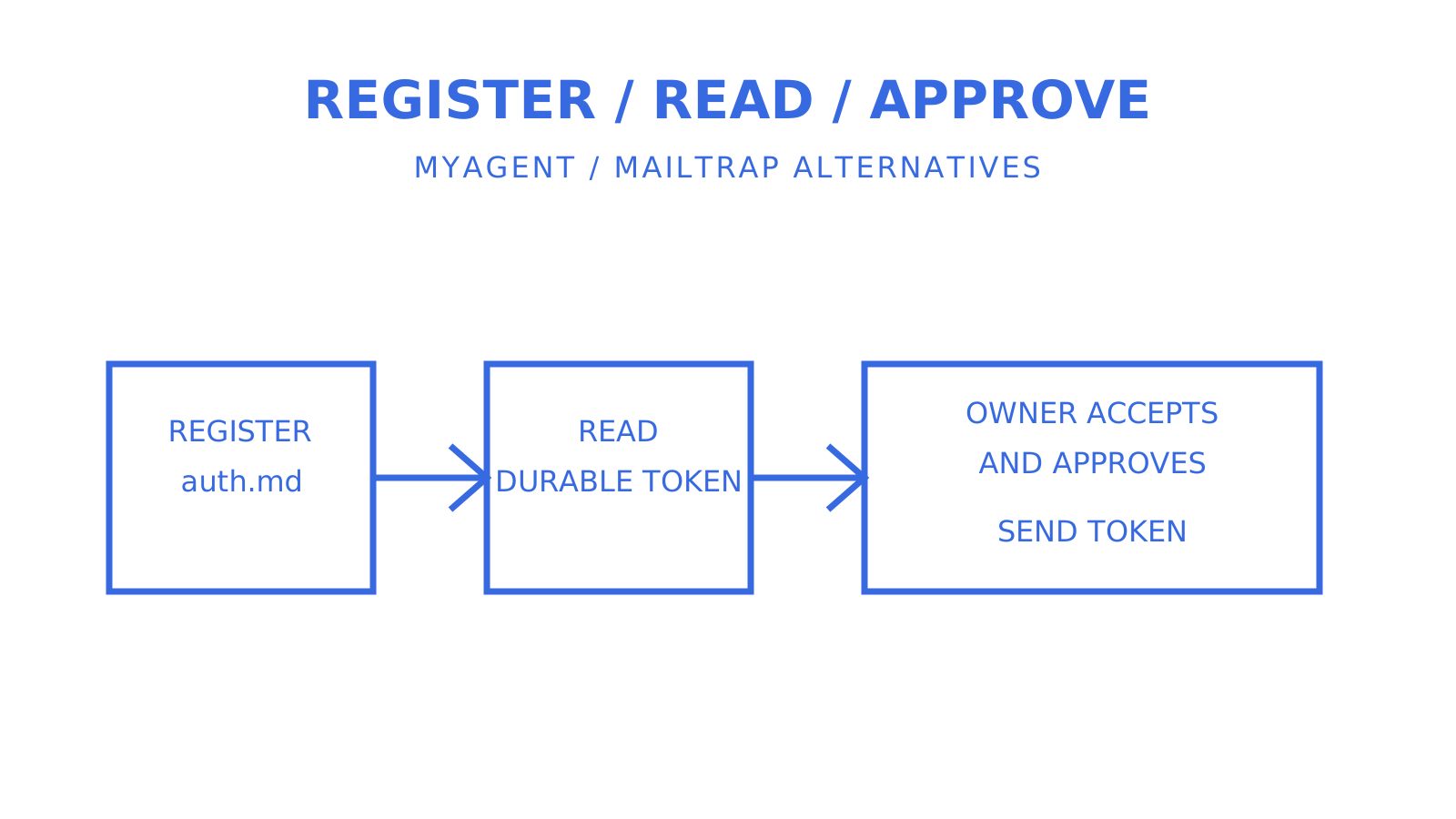
- Sendmux self-registration provisions a mailbox with a scoped, durable read and receive token. Sending requires the human owner to accept the invitation and explicitly approve it; the agent can then exchange the durable token for a short-lived Sending API token.
- An inbox API with search, threading, and MIME fetching is essential for agents to reliably manage conversations and avoid relying solely on webhooks or raw event streams.
- Credential models that prioritize transient, scoped tokens enhance security by limiting blast radius if a key is compromised, making self-service provisioning safer at scale.
- Outbound routing with multiple providers, quotas, and health checks helps maintain reputation and deliverability, especially when managing many low-traffic or tenant-specific mailboxes.
- Evaluation should focus on provisioning mechanics and credential scoping over feature lists or API support, as these determine long-term scalability and security for autonomous agent email systems.
Best mailtrap alternatives for agent mailboxes
The shortlist below assumes your agent is a first-class user of the mailbox, not a script pushing through someone else’s inbox. That distinction changes which columns matter: self-registration, scoped credentials and inbox depth outrank anything to do with sandboxed test emails.
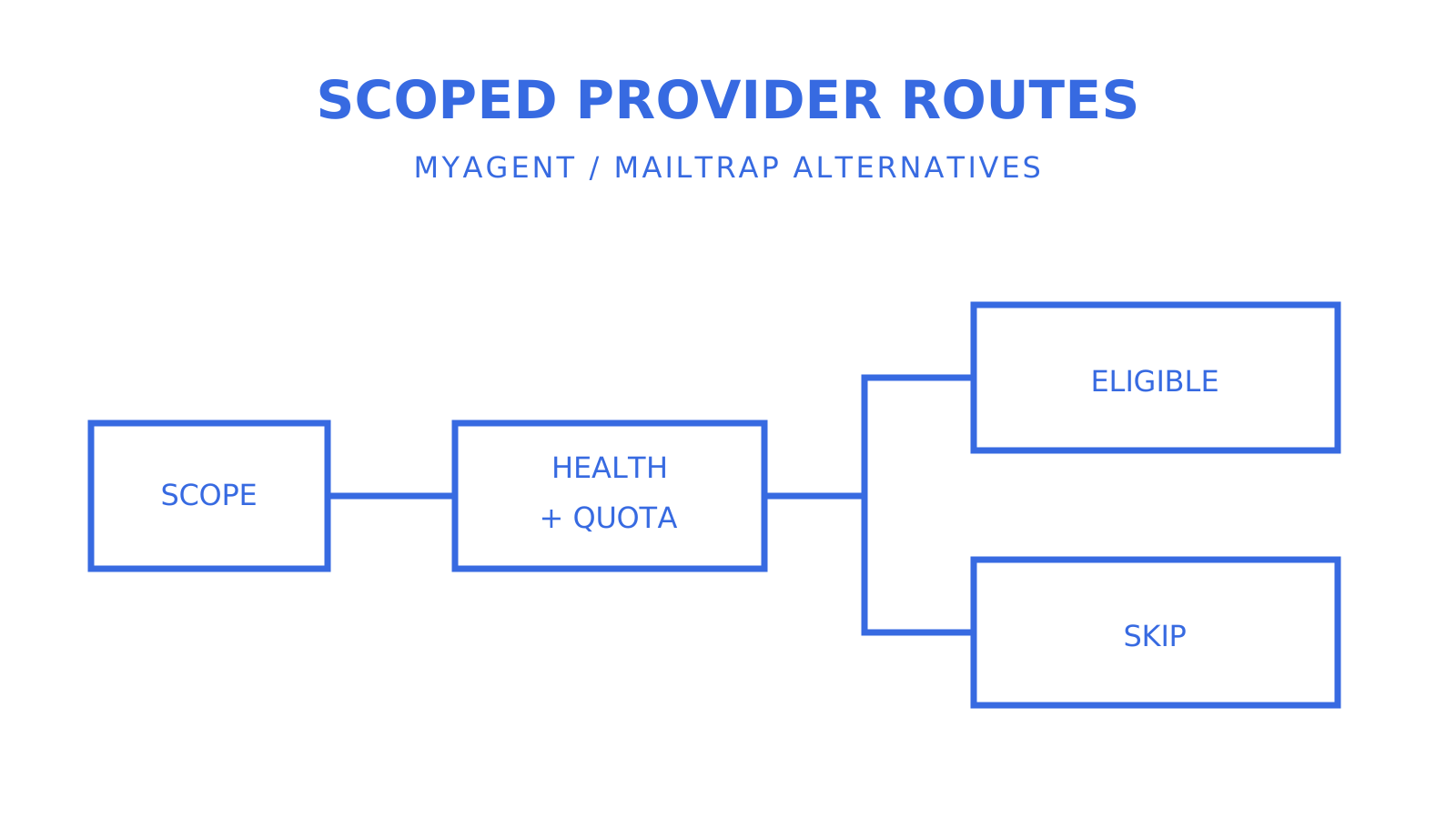
Sendmux lets an agent discover the registration instructions and provision a constrained mailbox without a card or a human signup step. Its current registration flow does not require a proof-of-work challenge. The initial durable token permits reading and receiving, including search, but sending requires the human owner to accept the invitation and explicitly approve sending. The agent can then exchange that durable token for a short-lived Sending API token. Sendmux routes through eligible providers in the key or mailbox’s configured scope, using provider quotas and health checks. Automatic failover can select another eligible provider after a definitive authentication rejection; permanent recipient failures are not retried as though they were provider outages.
Mailer To Go currently documents SMTP sending, inbound forwarding and inbound webhooks. Its developer documentation marks the REST API as coming soon, so a persistent inbox API and scoped project keys should not be assumed. Its documented setup starts with an account and sending-domain configuration; teams can evaluate its advertised MCP support separately.
Atomic Mail offers JMAP mailbox access, with MCP and AgentSkill interfaces. It also documents autonomous proof-of-work registration, so it is relevant both for frameworks that already speak JMAP and for agents that need to create an inbox. The service currently describes itself as open alpha.
AgentMail and Nylas Agent Accounts both provide API-created agent inboxes. AgentMail documents programmatic signup with restricted access until human email verification and offers custom domains; its Enterprise plan lists BYO cloud deployment and dedicated IPs. Nylas Agent Accounts are Nylas-hosted mailboxes created through the API on a registered domain or a Nylas trial domain, with account policies and quotas. For either product, confirm whether your required bring-your-own multi-provider routing, failover and provider health checks are supported by the selected plan.
What each comparison column actually means for your agent stack
Self-registration needs two separate checks: whether the agent can create an account without a signup dashboard, and whether it can provision further mailboxes through an API. Sendmux publishes its registration instructions through auth.md; the current flow does not ask the agent to solve a proof-of-work challenge. Model Context Protocol (MCP) is a separate interface for connecting AI applications to tools and data.
Inbox API completeness separates platforms that hand you a webhook payload from platforms that give you a persistent mailbox. Look for thread-aware replies using the In-Reply-To and References email headers; API fields such as in_reply_to and references need checking against each provider’s schema. Also check filtered search across sender, subject, body and date range, raw MIME fetching, and an unread-count operation that does not require downloading every message.
MCP or JMAP support can reduce integration work in different ways. MCP servers expose tools with schemas that an agent client can call; names such as send_email or get_thread depend on the server. JMAP provides a standard JSON mailbox protocol for sending, searching and threading messages, and an agent can use it directly or through an MCP adapter.
Credential models decide your blast radius if a key leaks. Prefer scoped, transient tokens over anything that doubles as a permanent SMTP password for agent-initiated flows.
Outbound routing with delivery groups and provider health checks can help keep a tenant on its intended sending route and avoid unhealthy providers. Reputation isolation also depends on the domains and IP addresses actually used, so routing alone does not guarantee that one noisy agent cannot affect the rest of the fleet.
Pro Tip: Ask every vendor whether an agent can register an account, provision a mailbox and obtain sending permission without a human action at each stage. OAuth consent is appropriate when an agent accesses an existing human mailbox; it is a different requirement from creating a new agent-owned inbox.
How to evaluate an agent mailbox platform in an afternoon
Run a short checklist before committing engineering time to integration:
- Can an agent provision a mailbox through an API call alone, with no manual signup step?
- Does the platform issue credentials scoped to the required mailbox and operations, and which tokens expire or can be revoked? Keep SMTP and IMAP credentials out of prompts and repositories; distinguish durable read access from short-lived sending authority.
- Does the inbox API support read, search and thread retrieval, not just a raw webhook dump?
- Is sending gated behind a human approval step, or can a freshly provisioned agent send unsupervised from day one?
- Are webhooks signed and retried with backoff, and can your receiver handle duplicates? If events use an SSE stream, verify reconnect, event IDs and replay or recovery behavior separately.
- Are SDKs, a CLI and an OpenAPI spec published, or are you writing your own client from scratch?
- Does the platform support your own domain’s SPF, DKIM and DMARC, and which setup and plan restrictions apply? Check separately whether the sender domain and sending IPs are shared or dedicated.
- Does outbound routing support multiple providers with quotas and automatic failover?
- Can you export delivery logs and metrics without contacting support?
- Does pricing combine a base subscription with usage charges, mailbox limits or paid capacity additions, and what does that cost for your actual traffic?
| Red flag | Why it matters |
|---|---|
| Mandatory human OAuth for every new agent-owned mailbox | Adds a manual provisioning step; OAuth consent for access to an existing human mailbox is a separate use case |
| Send-only API with no inbox state | Forces you to build threading and search yourself |
| Per-mailbox charges | Costs multiply fast when you provision thousands of low-traffic mailboxes |
| Unsigned or non-retryable webhooks | Missing signatures make authenticity harder to verify; missing retries increase the risk of lost events during an outage |
For a minimal Sendmux proof of concept, provision an agent mailbox through the API, read an inbound test message, invite a human owner and confirm sending stays locked until that owner accepts the invitation and explicitly approves sending. Then exchange the token, route one outbound message through an authorized connected provider and inspect the delivery logs. This exercises provisioning, read access, send gating and routing; record the actual setup time.
Deliverability basics: SPF, DKIM and DMARC still matter for delivery
SPF, DKIM and DMARC help authenticate email; they do not guarantee inbox placement. SPF identifies authorized sending hosts for the envelope-sender domain. DKIM signs selected message content so receivers can detect changes to the signed content. DMARC evaluates alignment with the visible From domain and passes when aligned SPF or aligned DKIM passes; its published policy requests how receivers handle a failure. Configure the records required by your chosen provider for your verified domain, whether you use managed sending or your own SMTP account.
When a platform serves thousands of agents or customers, a tenant’s poor sending practices can affect other senders sharing its domain or IP reputation. Separate subdomains, dedicated sending accounts and routing rules that quarantine a struggling sender can help, but check which domains and IPs are actually shared. For a managed route, evaluate per-hour and per-day caps, health monitoring and whether failed accounts are skipped; those controls can limit exposure without guaranteeing reputation isolation.
If you’re evaluating a platform on this axis, ask how it separates tenant domains, sending accounts and IP reputation, as well as how it supports SPF, DKIM and DMARC. Request the specific isolation and failure-handling behavior for the plan you intend to use.
The real gap in how people evaluate mailtrap alternatives
A testing-tools comparison asks which sandbox catches outbound mail before it reaches real inboxes. An agent-mailbox comparison also needs to examine a persistent email identity and access to replies. Keep that scope distinction explicit: Mailtrap offers production Email API/SMTP sending as well as testing products.
For a fleet that needs new agent-owned mailboxes, evaluate API provisioning and credential scoping early, alongside the inbox capabilities the workflow requires. A human consent step for every new agent identity adds operational work; OAuth access to an existing human mailbox addresses a different need. Test both models against your own provisioning volume and approval requirements.
JMAP or MCP support is useful, but neither replaces credential scoping or send gating. JMAP standardizes mailbox operations; MCP exposes tool interfaces. In either case, verify what a compromised credential could read or send and how that credential is revoked.
Prioritise the provisioning and credential model alongside required inbox features. Confirm the integration work for any missing capability before committing.
Try it yourself: registering an agent mailbox on myagent.mx
Myagent links to Sendmux’s auth.md registration instructions. The Sendmux free plan permits two mailboxes and one connected sending account, with a team-wide limit of 50 provider-accepted recipient occurrences per UTC day, so you can begin a POC without a card. The agent receives a working inbox and a durable read and receive token before the owner accepts the invitation; sending still requires explicit owner approval. Other products also offer API provisioning: Atomic Mail documents autonomous registration, AgentMail provides signup with human email verification, and Nylas Agent Accounts can be created through an authenticated API.
Start with three steps: register an agent mailbox through the discovery flow, read an inbound message via the Mailbox API, then invite yourself as the human owner and confirm sending stays locked until you accept the invitation and explicitly approve it. SDKs cover TypeScript, Python, Go, PHP, Ruby and Rust, and the CLI wraps all three API surfaces: Management, Mailbox and Sending. Choose the credential and permissions required by each surface. Once you’ve seen the claim flow work end to end, check the Sendmux product overview for how multi-provider routing and pricing scale past the free tier.
FAQ
What’s the best Mailtrap alternative for autonomous agents?
Sendmux is a candidate for agents that need to self-register a mailbox and read inbound mail before a human completes onboarding. Its durable read and receive token is separate from sending permission, which requires the owner to accept the invitation and explicitly approve sending. Compare that flow with Atomic Mail, AgentMail and Nylas Agent Accounts against your own approval and inbox requirements.
Is this the same category as Mailtrap’s testing sandboxes?
The focus here is production agent mailboxes and email APIs, rather than QA or staging sandboxes that intercept test emails. Mailtrap also offers production Email API/SMTP sending, so compare its relevant product with the inbox and provisioning capabilities your agent needs.
Why does MCP or JMAP support matter for an email API?
MCP can expose email operations as tools with schemas for an agent client. JMAP is a standard JSON protocol for mailbox data and operations such as sending, searching and threading. A provider may expose JMAP directly or wrap email operations in MCP tools; verify the actual interface and permissions.
Can an agent get a mailbox without a human signing up first?
On Sendmux, yes: an agent follows auth.md and receives a mailbox with a durable read and receive token through the current registration flow, without a proof-of-work challenge. Sending remains unavailable until the human owner accepts the invitation and explicitly approves it.
What’s the difference between a pre-claim token and a full sending credential?
A pre-claim Sendmux token is a durable read and receive credential. After the human owner accepts the invitation and explicitly approves sending, the agent can exchange that token for a short-lived Sending API token. The invitation alone does not grant send permission.
Do these platforms charge per mailbox or by usage?
Sendmux bills outbound usage per provider-accepted recipient occurrence, inbound usage per distinct mailbox delivery and storage by usage, without a per-mailbox usage fee; Pro also has a monthly team fee. AgentMail combines subscription capacity for inboxes, email volume and other resources with paid capacity additions. Nylas includes Agent Accounts, email volume, storage and bandwidth in its plans, with applicable overage charges.
Give an agent its own address
Sendmux is the Email Inbox API for AI Agents.